

Before a single brick is laid, a building plan has to move through a defined approval process. Understanding this sequence helps whether you're planning to build yourself or buying a property and want to confirm the construction was done properly.
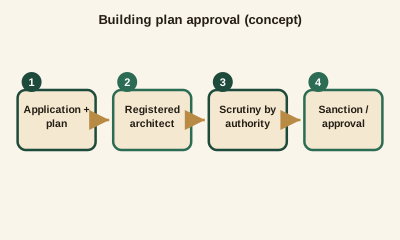
Step 1: Application and plan preparation
The process begins with an application to the competent authority (JDA, for much of Jaipur's planning area), accompanied by a building plan prepared in line with applicable rules — covering plot dimensions, proposed built-up area, height, setbacks and other required details.
Step 2: Involvement of a registered architect
Under the applicable framework, registered architects and related professionals carry defined responsibilities for building-plan submission and compliance, subject to applicable conditions. Their involvement is intended to ensure the plan meets FAR, height, setback and other bye-law requirements before it's formally submitted. See our detailed guide on the role of registered architects.
Step 3: Scrutiny by the competent authority
The submitted plan is scrutinised against the applicable Master Plan land-use classification, FAR/FSI norms, height restrictions, setback requirements and other conditions specific to the plot's zone and category.
Step 4: Sanction / approval
Once scrutiny is complete and the plan is found compliant, the authority issues sanction — the formal approval to proceed with construction according to that specific plan. Any deviation from the sanctioned plan during actual construction can create compliance issues later, particularly at the completion/occupancy stage.
| Stage | What to verify |
|---|---|
| Application | Plan matches the plot's actual dimensions and boundaries |
| Architect certification | Registered architect's involvement and compliance sign-off |
| Scrutiny | Compliance with FAR, height, setback and land-use rules |
| Sanction | Final approved plan document, retained for future reference |
After sanction: completion and occupancy
Sanction is not the end of the process. Once construction is complete, a completion certificate (confirming the building matches the sanctioned plan) and, in applicable cases, an occupancy certificate (confirming it's safe and fit to occupy) are the final steps. See our guide on Occupancy vs Completion Certificate for the distinction.
Related rules that feed into this process
- FAR and FSI rules
- Building height rules
- Building setback rules
- Jaipur house construction rules — the practical, ground-level version of this process
Planning construction and need help navigating approval?
Share your plot details and intended plan, and we'll help you understand the process and what to prepare for each stage.
Key takeaway
Building plan approval is a sequence, not a single event — application, professional certification, scrutiny and sanction, followed later by completion and occupancy. Whether you're building or buying, knowing where a specific property sits in this sequence tells you a great deal about the risk you're taking on.
Frequently Asked Questions
Do I need a registered architect to get a building plan approved in Jaipur?
Under the applicable framework, registered architects and related professionals carry defined responsibilities in building-plan approval for specified cases — confirm the current requirement for your specific project.
What happens if construction deviates from the sanctioned plan?
Deviations can create compliance issues, particularly at the completion or occupancy certificate stage, and can affect resale and legal standing.
Is a sanctioned building plan the same as a completion certificate?
No — sanction approves the plan before construction; a completion certificate confirms afterward that construction matches what was sanctioned.
Sources & Further Reading
This article is general research and analysis, not legal, valuation or investment advice. Rules, approvals, project timelines and site-specific conditions can change. Readers should verify current records with the relevant authority before purchasing land, constructing, or relying on an infrastructure proposal.
Related Tools & Checklists
Free calculators and due-diligence checklists relevant to this topic — no sign-up required.