

"It's JDA approved" is one of the most reassuring — and most misused — phrases in Jaipur real estate. It can refer to a single plot, or it can refer to the entire colony a plot sits within, and the two are not interchangeable. Here's how to tell the difference, and why it matters.
JDA-approved colony: the layout is cleared
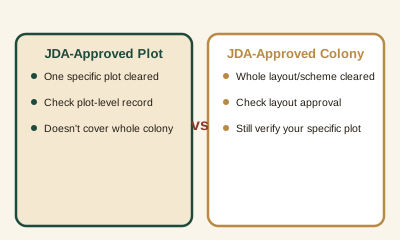
When a colony (a subdivided residential layout, sometimes developed by a private coloniser) receives JDA approval, it means the overall layout — roads, plot subdivisions, open spaces and infrastructure plan — has been cleared by the authority. This is a meaningful step, but it's a scheme-level approval. It does not, by itself, confirm the status of every individual plot within that colony, particularly regarding ownership records, encumbrances or whether a specific plot has been correctly carved out and registered.
JDA-approved plot: the specific unit is cleared
A plot-level approval or patta refers to the clearance of that specific unit — its boundaries, its recorded ownership, and its standing within the broader scheme. This is the level of detail that actually matters when you're the one buying, because a colony being generally approved doesn't automatically mean every individual plot within it is free of disputes, correctly documented, or accurately reflected in revenue records.
Why the distinction trips buyers up
A seller or broker saying "the colony is JDA approved" is often technically accurate — and also incomplete as a reassurance. It answers a scheme-level question while leaving the plot-level questions (which are the ones that affect you directly) unanswered. This is a common enough pattern that it's worth treating as a prompt to ask a more specific follow-up question, not a reason for suspicion by itself.
| What it confirms | What you should still check | |
|---|---|---|
| Colony-level approval | Overall layout and scheme cleared by JDA | Your specific plot's boundaries, title and record |
| Plot-level approval / patta | The specific unit's clearance and record | Whether it matches the sanctioned colony layout |
What to actually verify, either way
- The colony's layout approval, if applicable — and whether your plot's location matches that layout
- The plot's individual patta or ownership document
- The chain of title for the specific plot — see our documents checklist
- Whether the land was correctly converted, if it originated as agricultural land — see land conversion in Jaipur
- Direct confirmation with JDA rather than relying solely on the seller's representation — see how to verify a JDA property before buying
Want us to verify what's actually approved on a specific plot?
Share the details and we'll help you match the seller's claim against the underlying JDA documentation — free, no obligation.
Key takeaway
Treat "JDA approved" as the start of a question, not the end of one. Ask specifically what's approved — the colony, the plot, or both — and ask to see the corresponding document before you rely on it.
Frequently Asked Questions
If a colony is JDA approved, is every plot inside it automatically safe to buy?
Not automatically. Colony-level approval confirms the overall layout was cleared; you still need to verify the specific plot's title, boundaries and record independently.
What document proves plot-level approval?
A patta or equivalent plot-specific record issued by the competent authority, matched against the plot's actual location within the approved layout.
Who can confirm whether a colony is genuinely JDA approved?
JDA's own records and public portal are the primary source — verify directly rather than relying solely on marketing material or verbal assurance.
Sources & Further Reading
This article is general research and analysis, not legal, valuation or investment advice. Rules, approvals, project timelines and site-specific conditions can change. Readers should verify current records with the relevant authority before purchasing land, constructing, or relying on an infrastructure proposal.
Related Tools & Checklists
Free calculators and due-diligence checklists relevant to this topic — no sign-up required.